What Is the Best Personal Protective Equipment for Welding?

Time:2026-09-15 Author:Liam
0%

Choosing the right Personal Protective Equipment For Welding is not a matter of wearing a dark helmet and heavy gloves. It requires a hazard-based decision.

A welding station may contain intense ultraviolet radiation, molten metal, sparks, compressed gases, and airborne fumes. The International Agency for Research on Cancer classifies welding fumes as carcinogenic to humans. OSHA also warns that welding can expose workers to serious eye, skin, respiratory, and fire hazards. These findings make PPE selection a health decision, not merely a workplace routine.

NIOSH Director Dr. John Howard has described protective equipment as “the last line of defense.” That principle matters here. Local exhaust ventilation, safe work practices, and equipment maintenance should reduce exposure first. PPE must then protect the remaining vulnerable areas: eyes, face, lungs, hands, feet, and skin.

The details are physical. A helmet should fit securely while the lens shade matches the welding process. Gloves should resist heat without reducing grip. Flame-resistant clothing must cover exposed skin, including the neck and wrists. Respiratory protection may be necessary when ventilation cannot control fumes.

Small mistakes matter.

A loose cuff can catch a spark. Fogged lenses can hide a glowing edge. Incorrect shade selection can increase eye strain and injury risk. The American Welding Society and OSHA both stress task-specific protection, yet real workshops sometimes rely on habit instead of assessment.

This guide examines the best Personal Protective Equipment For Welding through safety data, practical experience, and recognized industry guidance. It also questions one uncomfortable assumption: more equipment is not always better protection. Poor fit, damaged gear, and false confidence can weaken even a carefully designed safety program.
What Is the Best Personal Protective Equipment for Welding?

What Hazards Make Welding Personal Protective Equipment Essential?

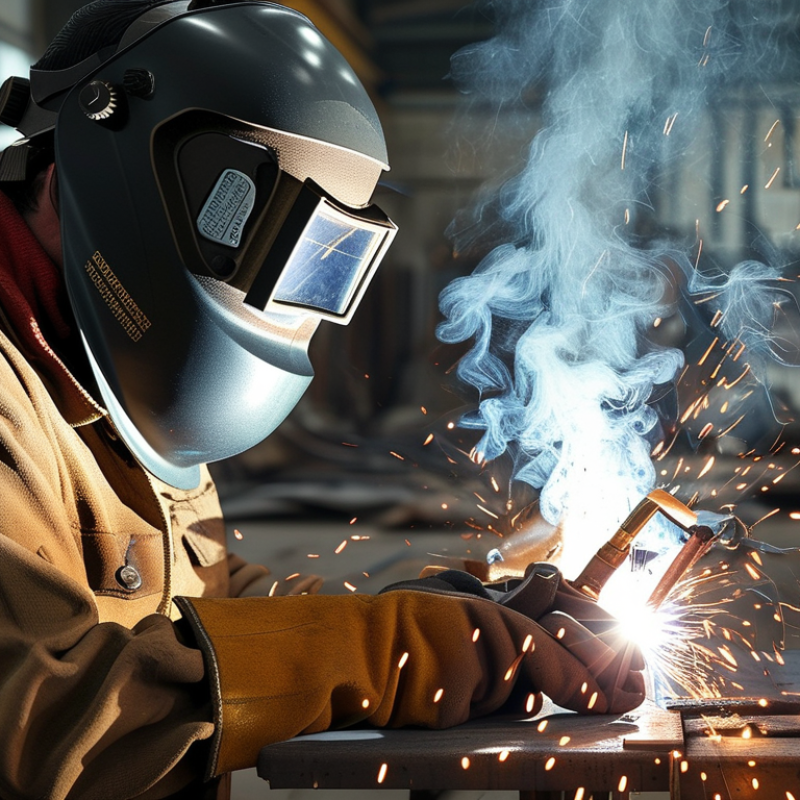
Welding PPE is essential because the hazards are immediate, intense, and easy to underestimate. The arc produces ultraviolet and infrared radiation, which can injure eyes and burn exposed skin. A properly shaded welding helmet protects vision, while safety glasses help block flying particles when the helmet is raised. Sparks and molten metal can enter loose cuffs or pockets. Flame-resistant clothing, leather gloves, and sturdy, non-slip boots create a safer barrier. Synthetic fabrics are especially dangerous because they can melt against the skin.

Welding also creates fumes and gases that may harm the lungs. Local extraction should remove contamination near the arc, but ventilation alone may not control every exposure. A suitable respirator may be necessary after a proper workplace assessment. Electric shock remains another serious risk, especially around damaged cables, wet floors, or poorly maintained equipment. Hearing protection can reduce harm from grinding and high workshop noise. In practice, PPE only works when it fits correctly and stays in good condition. I have seen small cracks in face shields missed during rushed inspections. That mistake is easy to repeat.

Tips: Check the helmet lens, gloves, sleeves, and boots before every job. Keep cuffs closed and pockets covered. Replace damaged PPE immediately. Do not rely on appearance alone; review the welding process, metals, coatings, ventilation, and exposure time before choosing respiratory protection. Personal comfort matters too, because uncomfortable PPE is more likely to be removed. Safety habits need constant reflection.

How to Choose the Right Welding Helmet and Eye Protection

For welding, the helmet is only part of your eye protection. OSHA cites an estimated 2,000 work-related eye injuries in the United States each day. Welding arcs can damage vision through ultraviolet and infrared radiation, even when the light feels brief. Choose a helmet with a suitable filter shade for your welding process and current. OSHA 29 CFR 1910.133 requires protection appropriate to the hazard. A darker shade is not automatically safer.

Check the helmet’s markings carefully. Look for compliance with ANSI/ISEA Z87.1, including impact protection where applicable. Auto-darkening lenses should switch before the arc reaches your eyes. Their sensitivity and delay settings matter in bright or poorly lit work areas. Test the controls before striking an arc. Small details matter.

Wear certified safety glasses with side shields beneath the helmet. They protect against sparks, fragments, and ultraviolet leakage during lifting or repositioning. Use a face shield over the glasses for grinding, because a welding lens is not a grinding shield. Inspect lenses for cracks, deep scratches, pitting, or fogging. Replace damaged equipment immediately. Prescription users need compatible protection, not ordinary glasses alone. Fit is often overlooked. A loose helmet, blocked vents, or poor shading can make a correct selection fail in practice. No helmet compensates for careless adjustment.

What Is the Best Personal Protective Equipment for Welding?

Choosing the right welding helmet and eye protection depends on the welding process and operating current. The chart below shows representative minimum filter shade numbers for a 100–160 ampere range, based on OSHA guidance.

How to use this chart: A higher shade number provides darker-filter protection. Always select the exact shade required for the process and current, and use a helmet and safety eyewear that meet applicable occupational eye and face protection requirements.

Which Clothing and Gloves Provide Reliable Heat and Spark Protection?

What Is the Best Personal Protective Equipment for Welding?

Reliable protection starts with clothing that resists heat, sparks, and brief flame exposure. OSHA recommends flame-resistant garments, leather gloves, aprons, and high-top footwear for welding tasks. Choose tightly woven leather or certified flame-resistant fabric. Avoid synthetic shirts. Some materials melt against skin.

ISO 11611:2015 evaluates protective clothing against molten-metal droplets, convective heat, and radiant heat. Select garments tested to this standard, then match protection levels to the welding process.

Cover the neck, wrists, waist, and boot openings. Sparks often travel farther than expected. A practical setup includes a long-sleeved jacket, leather gauntlet gloves, and trousers over boots. Gloves should fit closely while allowing finger movement.

Inspect seams, cuffs, and palms before every shift. The U.S. Bureau of Labor Statistics reported 2.6 million nonfatal workplace injuries and illnesses in private industry during 2023. Routine work still deserves serious controls.

The International Agency for Research on Cancer classifies welding fumes as carcinogenic to humans. Clothing cannot control fumes, so local exhaust ventilation remains essential. Respiratory protection may also be necessary after a proper hazard assessment.

I would not treat a thick apron as complete protection. It may restrict movement, trap heat, and encourage careless work. Replace damaged equipment promptly, even when the damage looks minor.

How Should Welders Protect Their Hearing, Breathing, and Feet?

A welder’s hearing, lungs, and feet face different hazards, so one piece of PPE cannot cover everything. NIOSH recommends limiting noise to 85 dBA over eight hours. Its 3-decibel exchange rate means every increase doubles the sound energy. A welding helmet does not protect hearing. Use properly fitted earplugs or earmuffs near grinders, plasma cutters, and heavy fabrication equipment. Test the fit when possible. Small gaps matter.

Breathing protection requires more than wearing a disposable mask. Welding fumes may contain manganese, chromium, nickel, and other hazardous contaminants. OSHA regulates these substances separately, rather than setting one universal welding-fume limit. A competent professional should review the metal, coating, ventilation, and work duration before selecting respiratory protection. Local exhaust ventilation should capture fumes near the arc. Fit testing is essential for tight-fitting respirators. Facial hair can break the seal. That detail is often ignored.

Feet need distance from heat, slag, sharp offcuts, and falling metal. OSHA 29 CFR 1910.136 requires protective footwear when foot injuries could result from falling objects, punctures, or electrical hazards. Choose sturdy, heat-resistant footwear with protective toes and puncture-resistant soles. Metatarsal protection may help during heavy fabrication. Keep trouser legs over the footwear, not tucked inside. Your feet need distance. Paper compliance is not protection. In real workshops, workers sometimes remove uncomfortable gear during long shifts. That is a design failure worth examining, not merely a discipline problem.

What Is the Best Personal Protective Equipment for Welding? - How Should Welders Protect Their Hearing, Breathing, and Feet?
PPE Category Main Welding Hazard Recommended Protection Selection and Use Guidance Inspection and Replacement
Welding Helmet Ultraviolet and infrared radiation, intense visible light, sparks, and flying particles. A properly rated welding helmet with a suitable fixed or auto-darkening filter shade. Choose the shade according to the welding process, current, and applicable workplace requirements. Keep the helmet fully lowered during arc initiation and welding. Replace cracked shells, damaged headgear, scratched cover lenses, and filters that do not switch or function correctly.
Safety Glasses Flying particles, grinding dust, and fragments that may enter around the helmet. Impact-rated safety glasses with side protection, worn under the welding helmet. Use clear lenses for indoor work and appropriate tinted lenses where required. Safety glasses do not replace a welding helmet. Replace lenses when they are cracked, heavily scratched, or no longer provide a clear field of view.
Face Shield Grinding debris, hot slag, and larger flying particles. An impact-rated face shield worn over safety glasses. Use it for grinding, chipping, and tasks with substantial splash or impact risk. A face shield alone is not adequate for eye protection. Inspect the visor and mounting system before use. Replace the shield if visibility or impact protection is reduced.
Hearing Protection Noise from arc welding, plasma cutting, grinding, chipping, and nearby equipment. Earplugs, earmuffs, or a combination selected from the measured noise exposure. Use hearing protection when noise exposure reaches workplace action levels or when required by the risk assessment. Earmuffs should seal completely around the ears; roll-down earplugs must be inserted correctly. Replace disposable earplugs after use. Clean reusable plugs and earmuff cushions; replace cushions that are hardened, cracked, compressed, or no longer seal properly.
Respiratory Protection Metal fumes, gases, ozone, nitrogen oxides, and coatings or contaminants released by heating. Use local exhaust ventilation first. Where ventilation does not adequately control exposure, use a properly selected respirator under a written respiratory-protection program. Respirator type and filters must match the contaminant and concentration. Tight-fitting respirators require medical evaluation, fit testing, and clean-shaven sealing surfaces. Do not use air-purifying respirators in oxygen-deficient or immediately dangerous atmospheres. Inspect before each use. Replace filters according to the change schedule, breathing resistance, damage, or contamination. Store respirators in a clean, sealed location.
Welding Jacket or Protective Clothing Arc radiation, sparks, molten metal, hot slag, and heat. Flame-resistant clothing appropriate for the welding process, including a long-sleeved jacket, apron, or other protective garments as needed. Use materials and coverage suitable for the work. Keep clothing fastened, cover exposed skin, and avoid synthetic fabrics that can melt. Remove oil, grease, and other flammable contaminants. Replace garments with holes, severe wear, open seams, embedded metal, or loss of protective properties. Clean according to the garment instructions.
Welding Gloves Heat, burns, sparks, sharp edges, and contact with hot workpieces. Heat-resistant welding gloves with sufficient length and dexterity for the process. Use gloves suitable for the welding method and required handling tasks. Do not use wet gloves near electrical welding equipment, and never handle hot metal with unprotected hands. Replace gloves with burn-through, holes, exposed seams, excessive stiffness, or contamination that cannot be removed.
Safety Footwear Falling objects, hot metal, sparks, sharp scrap, slips, and electrical contact hazards. Sturdy, safety-toe, slip-resistant footwear with heat-resistant construction and adequate ankle coverage. Choose footwear appropriate for the floor conditions and electrical hazards. Trousers should cover the boot openings to prevent sparks from entering. Keep laces and fasteners secure. Replace footwear when the toe protection, soles, stitching, or upper material is damaged, excessively worn, or no longer resists heat and slipping.
Welding Screens or Curtains Arc flash and ultraviolet radiation affecting nearby workers. Suitable welding screens or curtains positioned around the work area. Use them to control exposure to bystanders without obstructing ventilation or creating a trip hazard. Screens are an engineering control that supplements, rather than replaces, personal PPE. Inspect for tears, gaps, incorrect positioning, and damage. Replace materials that no longer provide effective arc-radiation control.
Important: PPE selection should be based on a task-specific hazard assessment, the welding process, materials and coatings being heated, ventilation, exposure measurements, and applicable occupational-safety requirements. PPE is most effective when combined with engineering controls, safe work procedures, training, and equipment maintenance.

How to Check, Maintain, and Replace Welding Protective Equipment

Welding PPE only works when it remains clean, intact, and correctly fitted. A helmet needs the correct shade for the welding process. Its lens should be clear, secure, and free from deep scratches. Check the shell for cracks before striking an arc. Inspect gloves for stiff leather, burn holes, and exposed seams. Flame-resistant clothing should cover the wrists, neck, and ankles. Keep synthetic fabrics away from sparks.

Make inspection routine. Check the respirator seal, straps, valves, and cartridges before each shift. A damaged seal can defeat an otherwise suitable respirator. NIOSH’s Hazard Review on welding fumes identifies manganese, chromium, nickel, and other airborne contaminants as important exposure concerns. Local ventilation still matters. PPE is not a substitute for effective extraction. No checklist is perfect. Workers may overlook a cloudy lens during a busy repair, which is exactly when attention matters most.

Replace equipment after impact damage, heat damage, contamination, or failed fit testing. Do not tape a cracked face shield or continue using hardened gloves. Replace respirator cartridges according to the written change schedule, not by smell alone. OSHA’s FY 2023 Top 10 data recorded 2,859 respiratory-protection violations and 1,452 eye-and-face-protection violations. Those figures suggest that availability is not enough; inspection and training remain weak points. Record replacement dates, but review the record honestly. A form can be complete while the equipment is unsafe.

FAQS

Does a welding helmet protect my hearing?

No. A helmet protects your eyes and face, not your ears. Use fitted earplugs or earmuffs near grinders and cutters. Small gaps matter.

When should welders use hearing protection?

Use hearing protection around loud equipment, especially during long shifts. Noise near 85 dBA can harm hearing over time. Fit matters more than appearance.

Is a disposable mask enough for welding fumes?

Not always. Fumes can contain manganese, chromium, nickel, and other contaminants. A qualified professional should assess the metal, coating, ventilation, and work duration.

What helps control welding fumes?

Local exhaust should capture fumes close to the arc. Respiratory protection may still be needed. PPE cannot replace effective ventilation.

How can I check a tight-fitting respirator?

Check the seal, straps, valves, and cartridges before each shift. Facial hair can break the seal. Fit testing is essential. This detail gets missed.

What footwear protects welders’ feet?

Choose sturdy, heat-resistant footwear with protective toes and puncture-resistant soles. Metatarsal protection may help during heavy fabrication. Keep trouser legs over the footwear.

How should welding PPE be inspected?

Check helmets for cracks, cloudy lenses, and deep scratches. Inspect gloves for burn holes, stiff leather, and exposed seams. Look closely, even when busy.

When should welding protective equipment be replaced?

Replace equipment after impact, heat damage, contamination, or failed fit testing. Do not tape a cracked face shield. Follow written cartridge schedules, not smell alone.

Why do workers sometimes remove uncomfortable PPE?

Long shifts, heat, and poor design can make PPE difficult to wear. That may be a design problem, not only a discipline problem. Still, the risk remains.

Can a completed inspection form prove PPE is safe?

No. A form can be complete while equipment remains damaged or poorly fitted. Review the actual helmet, gloves, respirator, and footwear. Paper is not protection.

Conclusion

Choosing the right Personal Protective Equipment For Welding is essential because welding creates intense light, heat, sparks, fumes, noise, and flying particles that can cause serious injuries. A properly rated welding helmet with suitable eye protection helps shield the face and eyes from ultraviolet and infrared radiation, glare, and debris. Flame-resistant clothing, a durable welding jacket, long trousers, and heat-resistant gloves protect the skin from burns, sparks, and sharp metal edges while allowing safe movement.

Welders should also consider hearing protection in noisy work areas, respiratory protection when ventilation is insufficient, and sturdy, heat-resistant footwear with secure coverage. PPE should fit comfortably without leaving exposed skin or loose material near flames or equipment. Before every task, workers should inspect helmets, lenses, gloves, clothing, respirators, and footwear for cracks, holes, contamination, or wear. Damaged or weakened equipment must be cleaned, maintained, and replaced promptly to preserve reliable protection.

Liam

Liam

Liam is a dedicated marketing professional with a profound expertise in the industry, where he excels at highlighting the unique advantages of our core products. With a keen understanding of market trends and consumer needs, Liam frequently updates our company’s professional blog, providing......