In China’s changing industrial landscape, a Personal Protective Equipment Safety Meeting should be practical, specific, and evidence-based. It is not merely a scheduled presentation. It is a focused review of hazards, equipment selection, worker behavior, and emergency readiness. A useful meeting begins beside real work areas, where damaged gloves, fogged face shields, and loose helmet straps can be examined directly.
Dr. David Michaels, former Assistant Secretary of Labor for Occupational Safety and Health, has emphasized, “PPE is the last line of defense.” This principle should guide every discussion. Teams must first consider safer processes, engineering controls, and administrative measures. Then, they should confirm whether respirators, hearing protection, eye protection, protective clothing, and fall protection match the identified risks. Fit matters. Training matters more than appearance.
Small details expose weak systems. A worker may wear safety glasses but lift them during dust removal. A harness may look intact but have an unreadable inspection label. These moments deserve honest discussion, not blame. Still, this introduction has a limitation: one meeting cannot prove long-term safety performance. Follow-up observations, maintenance records, worker feedback, and refresher training remain necessary.
The strongest Personal Protective Equipment Safety Meeting connects policy with visible action. It explains why each item is required, demonstrates correct use, and invites workers to report discomfort or defects. Supervisors should record concerns and verify corrective actions. Safety improves when people can see the standard, practice it, and question it. That process is imperfect, but it is dependable when repeated consistently.
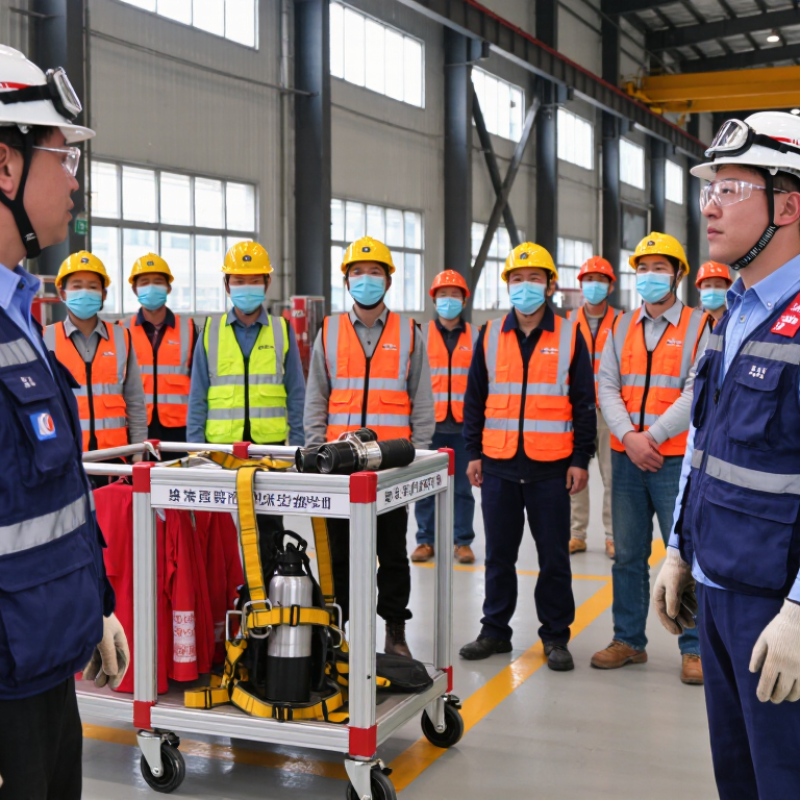
A practical PPE meeting should begin with hazards, not equipment. Under GB 39800.1-2020, employers assess exposure risks and select protection for the body parts involved. ISO 45001 adds a management framework for worker participation, operational control, and continual improvement. A cutting area may require eye, hand, foot, and hearing protection. Dusty work may need respiratory protection, but only after ventilation and isolation controls are reviewed.
Walk through the actual worksite. Check sharp edges, noise readings, airborne particles, heat, and moving machinery. Ask workers where straps loosen, lenses fog, or gloves reduce grip. These small details often reveal risks missed by paperwork. Each item should match the hazard, fit the wearer, and remain usable throughout the task. Records should show risk findings, selection reasons, training, inspections, replacement dates, and corrective actions.
A meeting can use one simple scenario: a worker enters a noisy maintenance room with safety glasses but no hearing protection. Discuss the exposure, access controls, and emergency response. Then review storage and cleaning conditions. A checklist alone is not enough. In field reviews, teams sometimes confirm PPE distribution but overlook facial fit testing or seasonal heat stress. That gap deserves honest attention. Requirements may be clear, yet implementation can remain uneven. Supervisors should observe behavior, invite worker feedback, and revise controls when conditions change. Safety improves through repeated verification, not one perfect meeting.
Start with the hazard, not the product catalogue. Identify dust, noise, chemicals, heat, impact, oxygen deficiency, and fall risks. Then assess exposure level, duration, contact route, and task frequency. The best choice may change when the task changes.
It provides a framework based on workplace hazard assessment and worker protection needs. Check relevant GB requirements, certification records, size ranges, maintenance instructions, and replacement periods. A document alone cannot confirm practical protection.
Use sealed eye protection, suitable respiratory protection, and hearing protection. Keep visible housekeeping controls in place. Fine dust can settle on nearby surfaces. Inspect the area, not only the worker.
No. A KN95 respirator must meet at least 95% filtration at 0.3 micrometres under GB 2626-2019. Filtration is not the same as complete protection. Fit, wearing method, storage, and hazard type also matter.
Check the seal around the nose, cheeks, and chin before work. Perform a seal check after positioning the respirator. Facial hair may cross the sealing area and create leakage. A loose nose seal can defeat good filter performance.
Replace it when straps are damaged, the material is wet, or visible soil appears. Replace it when sealing becomes difficult. Storage conditions also matter. I sometimes focus too much on the printed rating.
Fogging, discomfort, and poor fit often encourage brief removal. That small action deserves attention, not blame. Improve ventilation, fit, and lens choices. A meeting should ask whether workers can wear PPE for the whole shift.
Ask whether workers can use the equipment correctly for the entire shift. Discuss speaking, movement, glasses fogging, and strap pressure. Check PPE after purchase, not only during procurement. No selection table is perfect.
A Personal Protective Equipment Safety Meeting provides a structured way to identify workplace hazards, evaluate exposure risks, and select suitable protective equipment under GB 39800.1-2020 and ISO 45001 principles. PPE should be chosen according to the hazard type, exposure level, work environment, and applicable GB standards. For respiratory protection, KN95 respirators are designed to provide at least 95% filtration efficiency for particles around 0.3 μm when properly fitted and used. The meeting should also review equipment limitations, inspection, maintenance, replacement, and storage requirements.
Effective protection depends on more than simply providing PPE. Workers should receive practical training, complete fit testing where required, and understand safe working procedures for extended periods such as an eight-hour shift. Safety leaders can measure meeting effectiveness through PPE compliance rates, incident and near-miss trends, corrective actions, and audit results. Regular reviews help identify gaps, improve worker awareness, and strengthen controls before hazards lead to injury or exposure.

 GoPro Safety