Personal Protective Equipment In The Workplace is often the visible face of safety. A hard hat, respirator, or cut-resistant glove may prevent a serious injury. Yet effective protection begins before equipment reaches a worker’s hands. Employers must identify hazards, improve work practices, and select equipment that matches exposure levels.
The International Labour Organization reported nearly 2.93 million work-related deaths globally each year, alongside about 395 million nonfatal occupational injuries (ILO, 2023). In the United States, the Bureau of Labor Statistics recorded approximately 2.6 million private-industry injuries and illnesses in 2023 (BLS, 2024). These figures show the scale of workplace risk. They do not prove that PPE alone is enough. It is not.
Dr. David Michaels, former Assistant Secretary of Labor for Occupational Safety and Health, has described PPE as “the last line of defense.” That principle remains practical. A respirator needs a proper fit test. Gloves require resistance suited to the chemical or cutting hazard. Face shields should not replace safety glasses. Small details matter.
Industry research also reflects growing demand. Grand View Research valued the global PPE market at approximately $78.6 billion in 2023. However, market growth does not guarantee worker protection. A poorly fitted mask can leak. A damaged helmet can look acceptable. Training, inspection, replacement schedules, and worker feedback must support every purchase. No checklist is perfect. That gap deserves honest review. Reliable Personal Protective Equipment In The Workplace depends on evidence, competent supervision, and daily habits—not impressive equipment alone.
China Best Personal Protective Equipment In The Workplace?
Under GB 39800.1-2020, workplace PPE selection should begin with hazards, not product popularity. Employers should assess machinery, chemicals, dust, noise, heat, falling objects, and biological exposure. The assessment should include frequency, severity, and worker exposure time. A helmet may protect against impact, but it cannot control chemical splash or poor visibility. The “best” equipment depends on the task.
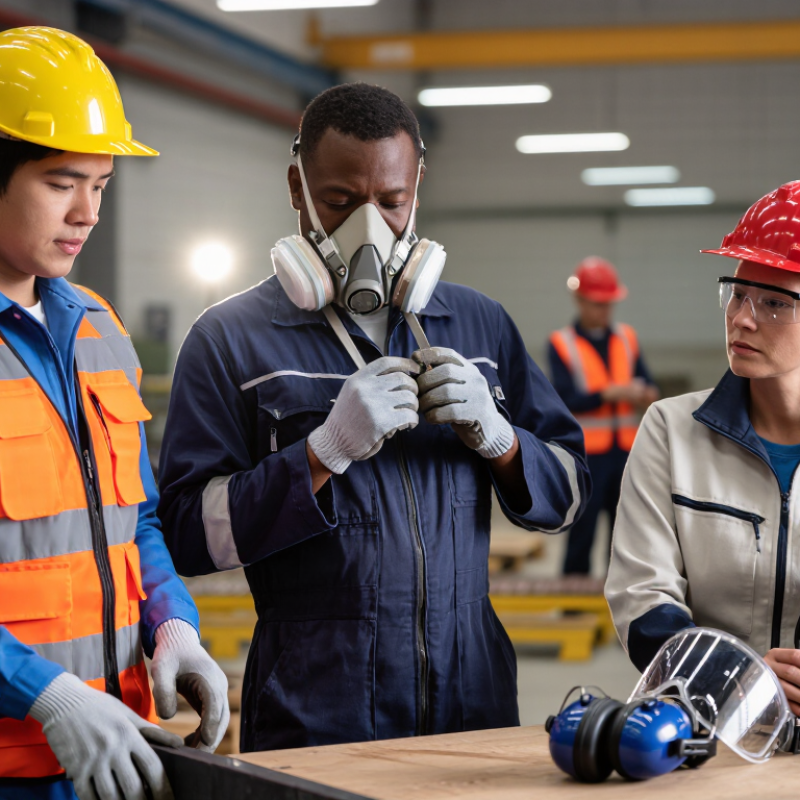
A practical selection process connects each hazard with a clear protective function. Eye protection should match particles or liquid splash. Respiratory protection should reflect the contaminant and its concentration. Gloves require attention to puncture, heat, chemicals, and grip. Footwear should suit slipping, crushing, or static risks. Fit matters greatly. A loose respirator or oversized glove can create danger during ordinary movement. Workers also need training, cleaning procedures, inspection points, and replacement rules.
Small details often decide whether PPE works. Check straps before a noisy shift. Store respirators away from dust and moisture. Record damaged equipment instead of quietly reusing it. Paper compliance can still fail. A signed form does not prove comfortable fit or correct use. Supervisors should observe real work conditions and ask workers what causes discomfort. The assessment may need revision after equipment changes, incidents, or seasonal heat. Some selections will be imperfect at first, and that weakness should be documented rather than hidden.
Begin with hazards, not popular products. Assess machinery, chemicals, dust, noise, heat, falling objects, and biological exposure. Consider frequency, severity, and exposure time. The best equipment depends on the task.
No. A helmet may reduce impact injuries, but it cannot control chemical splashes or poor visibility. Match each item to a protective function. One product cannot solve everything.
Match eyewear to particles, liquid splashes, or ultraviolet exposure. Check impact resistance, coverage, and anti-fog performance. Clear lenses alone may be inadequate. Fogged lenses can hide moving machinery.
Select gloves for cuts, punctures, heat, chemicals, and grip. Different materials provide different protection. Oversized gloves may catch during ordinary movement. Fit matters.
Consider slipping, crushing, punctures, static, and electrical risks. Check toe protection, sole design, insulation, and slip resistance. Toe protection alone is not enough. Wet floors expose weak choices quickly.
Match respiratory protection to the contaminant and its concentration. A loose respirator may leak during movement. Store respirators away from dust and moisture. Fit practice is essential.
Measure workplace noise before choosing earplugs or earmuffs. Loose earplugs may provide little protection. Earmuffs can interfere with helmets or eyewear. Check fit during each shift.
Inspect PPE before or during every shift. Check straps, record damage, and replace unsafe equipment promptly. Train workers in fitting, cleaning, storage, and replacement. Reassess after incidents, equipment changes, or seasonal heat.
Not always. A signed form does not prove comfortable fit or correct use. Supervisors should observe real work and ask about discomfort. Some selections will be imperfect. Document weaknesses, then improve them.
Choosing Personal Protective Equipment In The Workplace in China requires a risk-based approach aligned with the GB 39800.1-2020 framework. Employers should identify hazards, assess exposure levels, and select suitable protection for each task rather than relying on a one-size-fits-all solution. For respiratory risks, KN95-class filtering devices should meet the performance requirements of GB 2626-2019, including filtration efficiency of at least 95% under the specified testing conditions.
Different hazards require different protective measures, including eye and face protection, gloves, safety footwear, hearing protection, and other task-specific equipment. For work at height, fall protection systems should comply with GB 6095-2021 and be properly inspected before use. Effective PPE management also includes product certification, correct fitting and fit testing, regular inspections, timely replacement according to condition and service life, and practical worker training. Together, these measures help improve protection, compliance, and safe working practices.

 GoPro Safety